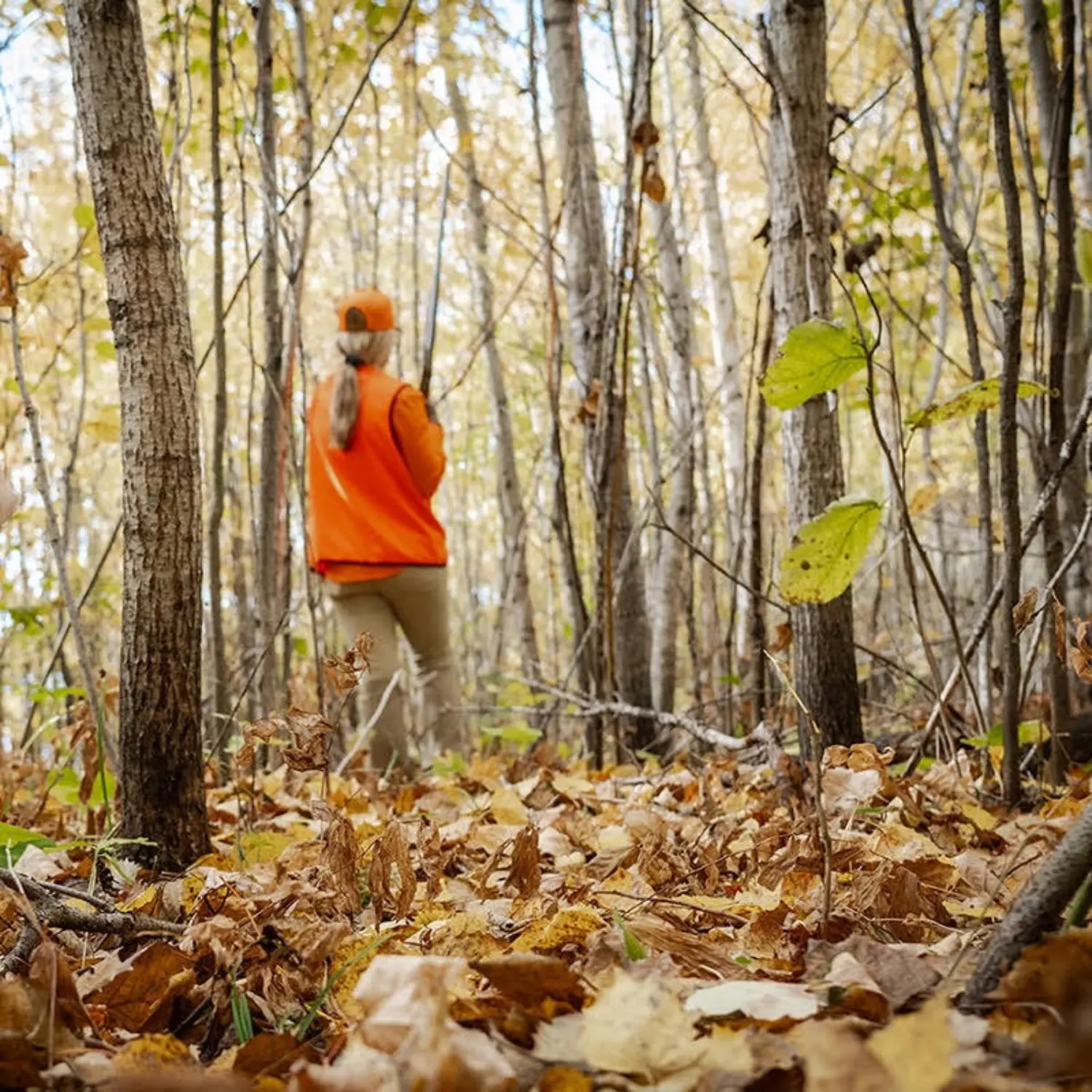
The Ruffed Grouse Society & American Woodcock Society (RGS & AWS) welcomed 85 participants to Grand Rapids, Minnesota, Oct. 8-9 for the 44th annual National Grouse & Woodcock Hunt, bringing together hunters, conservationists and supporters united by a shared commitment to healthy forests and abundant wildlife.
Established in 1982, the National Grouse & Woodcock Hunt is a longstanding tradition that extends far beyond two days afield. The event provides an opportunity to gather scientific data on ruffed grouse and American woodcock, strengthen relationships among conservation supporters and recognize individuals whose dedication helps advance the RGS & AWS mission.
Decades of Data Inform Conservation
Each year, the National Grouse & Woodcock Hunt provides valuable information about ruffed grouse and American woodcock populations. Data collected during the event contribute to a long-term record that helps researchers and conservation professionals better understand population trends, reproduction and habitat conditions.
During this year's hunt, 44 teams recorded 1,047 ruffed grouse flushes and 1,580 American woodcock flushes. Hunters took 119 ruffed grouse and 318 American woodcock. Hunt teams spread out across five counties within an 80-mile radius of Grand Rapids, highlighting the geographic reach of the event and the region’s upland bird hunting opportunities.
2026 Hunt Highlights
Ruffed grouse: 119 birds taken, compared with 158 in 2025 and a 10-year average of 135.
Grouse flush rates: 11.9 flushes per team, per day, compared with 12.1 in 2025.
American woodcock: 318 birds taken, compared with 208 in 2025 and a 10-year average of 267.
Woodcock flush rates: 18 flushes per team, per day, compared with 9.9 in 2025.
While the number of grouse taken declined from 2025, the number of grouse flushed remained relatively consistent. Woodcock encounters increased significantly, with nearly twice as many flushes recorded compared with the previous year.
Hunters took approximately one out of every nine grouse flushed and one out of every five woodcock flushed, demonstrating that the vast majority of birds encountered during the event were not shot.
Beyond these numbers, RGS & AWS staff and volunteers examined birds brought to the event's bird tent, documenting age, sex, weight and other biological characteristics. These measurements provide insights into population dynamics and reproductive success, contributing to the scientific foundation that informs conservation efforts.
Students from Minnesota North College's Itasca campus assisted with bird measurements and data collection, gaining hands-on experience in wildlife research alongside RGS & AWS staff.
Connecting Forest Management and Wildlife Habitat
The event also provided an opportunity for participants to see science-based conservation in action.
Ahead of this year's hunt, RGS & AWS hosted a field tour on the Chippewa National Forest, highlighting collaborative forest management efforts that improve wildlife habitat, forest health and public hunting opportunities.
Todd Tisler, wildlife program manager for the Chippewa National Forest, discussed forest management partnerships, while Josh Bednar, senior research staff scientist and wildlife ecologist with the Natural Resources Research Institute, shared findings from breeding bird surveys.
Participants also toured recent habitat improvement projects along a hunter walking trail, demonstrating how active forest management can benefit ruffed grouse, American woodcock and other forest wildlife.
The tour reinforced the importance of partnerships among conservation organizations, public land managers and researchers in creating and maintaining the diverse forest habitats wildlife need.
Recognizing Conservation Leadership
This year's gathering marked the presentation of the inaugural Diana and David L. Moore Conservation Excellence Award, recognizing individuals whose leadership, generosity and dedication have made lasting contributions to conservation and the RGS & AWS mission.
Three longtime supporters received the award: Wayne Jacobson, Bruce Ogle and David Sandstrom.
Through their leadership, fundraising efforts, land stewardship and willingness to share their properties and knowledge with others, these individuals have helped advance conservation and sustain the traditions that make the National Grouse & Woodcock Hunt possible.
Their recognition reflects the important role dedicated individuals play in supporting science-based conservation and inspiring others to become involved.
A Tradition Built on Conservation and Community
For more than four decades, the National Grouse & Woodcock Hunt has brought together people who recognize the connection between healthy forests, abundant wildlife and the future of hunting.
The event's continued success depends on the generosity of supporters, landowners, huntsmen, volunteers and conservation partners who contribute their time, resources and expertise year after year.
While the camaraderie and days spent behind bird dogs remain central to the experience, the National Grouse & Woodcock Hunt's lasting value lies in the scientific information collected, relationships strengthened and conservation work it helps support.
As RGS & AWS looks toward the future, the annual gathering remains an important reminder that meaningful conservation is built through science, partnerships and people committed to improving forests for wildlife, hunters and generations to come.
To help support forest stewardship for our forests, our wildlife and our future, visit RuffedGrouseSociety.org.
###
Media Contact:
Logan Holtz
Director of Marketing and Communications
Ruffed Grouse Society & American Woodcock Society
LoganH@RuffedGrouseSociety.org